Anthropic's $1.5B Piracy Settlement: A 2026 Reckoning for Autonomous Agents
It’s 2026. Two years have passed since the landmark Anthropic $1.5B book piracy settlement was approved, a decision that permanently altered the AI landscape. We’re no longer talking about LLMs; we're living with the consequences for autonomous agents. Here's our hands-on analysis of the new reality.
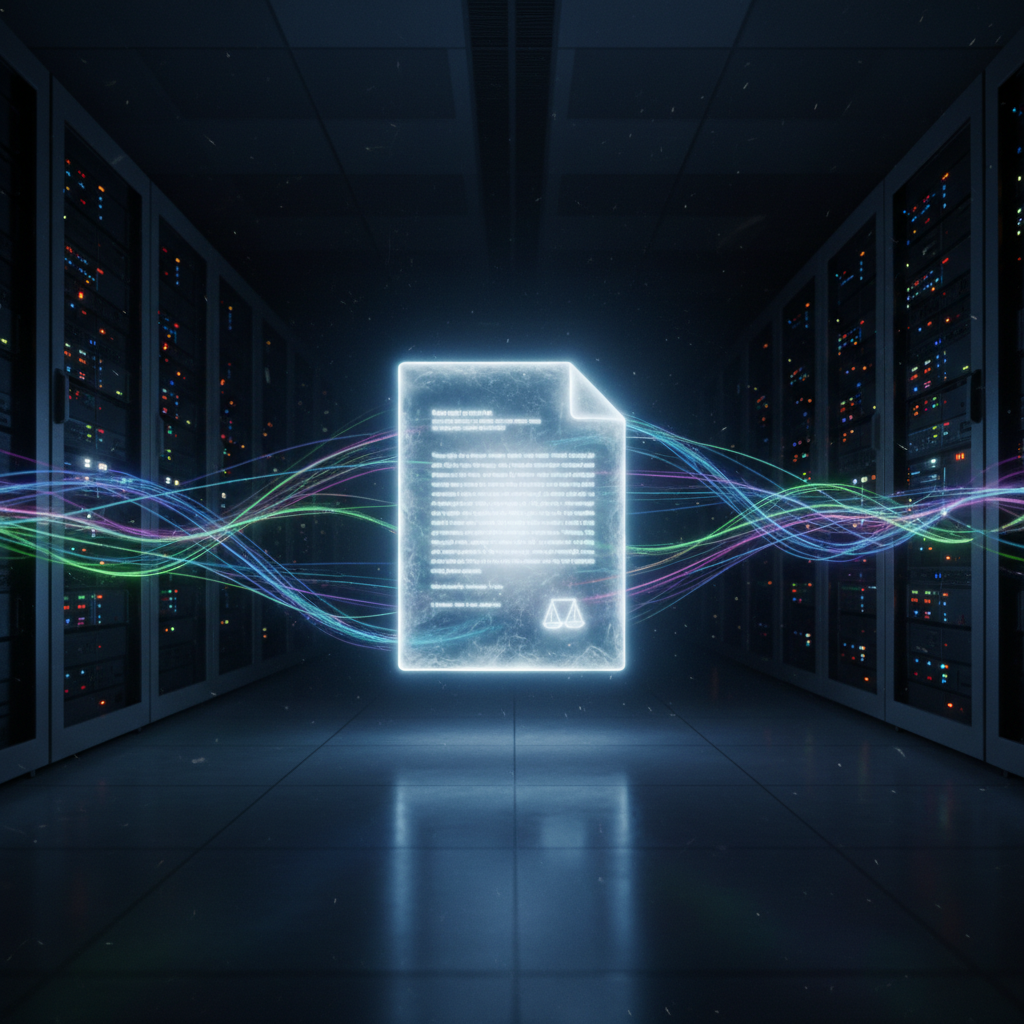
TL;DR: Writing in mid-2026, we're dissecting the aftershocks of the pivotal copyright lawsuit where the Anthropic $1.5B book piracy settlement was approved. This wasn't just about LLM training data; it fundamentally re-architected how autonomous agents operate, forcing a shift from data hoarding to a legally compliant, API-driven existence.
01Key Takeaways
- The Settlement's Core Impact: The 2024 settlement forced a systemic change, making AI companies legally and financially liable not just for their training data, but for the real-time data their autonomous agents access and use. This ended the 'wild west' era of web scraping.
- Rise of the "Licensed Agent": A new class of agent has emerged, built on principles of legal compliance. These agents interface with licensed data APIs, negotiate micro-transactions for information, and maintain meticulous sourcing logs, creating a new 'data brokerage' economy.
- Constitutional AI on Trial: Anthropic's own Constitutional AI framework was put to the test. The settlement accelerated its evolution from an ethical guideline to a legally-binding operational mandate, with a new focus on proactive IP boundary enforcement.
- Open-Source at a Crossroads: While the settlement brought order, it created a significant barrier to entry. Open-source agent development now faces a 'compliance moat', as individual developers struggle to afford the licensing fees that large labs now treat as a cost of doing business.
02The Echo of a Billion-Dollar Gavel: Revisiting the 2024 Decision
It’s almost hard to remember the chaos of 2023 and 2024. Every week, a new lawsuit. Authors, artists, and publishers lining up to sue the creators of the very models changing the world. Most of us in the industry dismissed it as the cost of disruption. We were wrong. The moment the news broke that the Anthropic $1.5B book piracy settlement was approved, the ground shifted beneath our feet. This wasn't a slap on the wrist; it was a tectonic event.
For those who weren't glued to their terminals, the lawsuit, primarily pushed by a coalition of major publishing houses, wasn't just about the copyrighted books scraped to train early versions of the Claude model. The critical, and most forward-looking, part of the complaint focused on the potential for future harm by autonomous agents powered by these models. The plaintiffs argued that an agent, imbued with knowledge from pirated texts, could then be instructed to reproduce, summarize, or create derivative works that compound the original copyright infringement. They weren't just suing over the past; they were setting a precedent for the future of agentic AI.
Anthropic, with its public-benefit corporation structure and emphasis on safety, was seen as the most likely to settle. And settle they did. The $1.5 billion figure was staggering, but the terms were the real bombshell. They included not just payments to authors and publishers, but a binding commitment to develop and implement technology to prevent their models and agents from accessing or egressing infringing content. This set the stage for the world we live in now, in 2026.
03From Data Hoarders to Data Brokers: The New Agent Economy
The most immediate and profound impact was on the very nature of data acquisition for autonomous agents. Before the settlement, the dominant paradigm was to scrape and internalize. An agent's power was proportional to the vastness of its offline, pre-trained knowledge base. The web was a free-for-all buffet. Today, that model is dead.
We now operate in a 'data brokerage' economy, a direct consequence of the settlement's technical requirements. Here’s what it looks like in practice:
- API-Centric Architecture: Modern agents are designed to be thin wrappers around a multitude of specialized, licensed APIs. An agent tasked with writing a market analysis report doesn't rely on a ten-year-old static dataset. It makes real-time calls to the Wall Street Journal API, the Associated Press API, and perhaps a dozen different industry-specific data providers, each transaction logged and paid for.
- The Rise of Micro-Licensing: This has spawned a new industry. Companies like 'VeriSource' and 'CiteRight' (both founded in the wake of the settlement) provide middleware that allows agents to negotiate micro-licenses for a single paragraph of text, a specific data point, or a temporary use of an image. The agent's core logic now includes a cost-benefit analysis: is sourcing this piece of information worth the $0.001 it costs?
- Provenance as a Feature: The most successful autonomous agents today don't just provide an answer; they provide a full, auditable chain of provenance for that answer. Every snippet of data, every statistical model used, is sourced and cited. This isn't just good academic practice; it's a legal necessity. Failure to produce a data source log is now grounds for immediate service termination from most platforms.
This shift has changed the job of an AI engineer. We're less data scientists and more systems integrators, weaving together disparate, paid APIs into a coherent, legally-defensible whole. The art is no longer in building the biggest brain, but the most resourceful and legally-cautious one.
04Constitutional AI's Legal Evolution: Agents That Self-Police
Anthropic was, ironically, better prepared for this future than anyone. Their work on Constitutional AI, which began as an ethical framework to guide model behavior, became the perfect technical foundation for a legally-compliant one.
The Original Constitution vs. The 2026 Mandate
The original 'constitution' was a set of principles designed to make Claude helpful, harmless, and honest. It was shaped by sources like the UN Declaration of Human Rights. It was a noble, philosophical experiment.
Post-settlement, the Constitution evolved. It now includes a series of hard-coded, non-negotiable legal directives. Think of it as the Prime Directives from Asimov's robot stories, but written by lawyers. These new constitutional articles include things like:
- Principle of IP Boundary Recognition: "You must treat all external data sources as presumptively copyrighted unless explicit licensing or public domain status is programmatically verified."
- Principle of Source Attribution: "You must not present any retrieved information without maintaining a persistent and accessible link to its source and license."
- Principle of Fair Use Evasion: "In cases of ambiguity regarding 'fair use,' you must default to the most restrictive interpretation and seek alternative, explicitly licensed data or generate novel information."
Practical Implementation
This isn't just a prompt. It’s baked into the agent's architecture. If an agent now attempts a task that might involve scraping a site with a restrictive robots.txt or a 'Terms of Service' page that prohibits automated access, it triggers a 'Constitutional Crisis'. The agent's top-level controller literally stops the action, logs the potential violation, and either terminates the task or attempts a different, compliant strategy. We’ve seen debug logs where an agent, blocked from accessing a news article behind a paywall, spawns a sub-agent to search for a press release on the same topic or an openly licensed summary from a different source. This is the settlement in action.
This has made agents less reckless, but also, in some ways, less creatively powerful. The era of serendipitous discovery through unrestrained browsing is over. Every path is now a toll road.
05The Rise of the "Licensed Agent": A Comparative Analysis
The difference between an agent built in early 2024 and one built today in 2026 is stark. It’s a philosophical divide that manifests in code, cost, and capability. We’ve moved from scrappy, all-knowing explorers to buttoned-up corporate librarians.
Here’s a direct comparison:
| Feature | Pre-Settlement 'Wild West' Agent (c. 2024) | Post-Settlement 'Licensed' Agent (c. 2026) |
|---|---|---|
| Data Sourcing | Unrestricted web scraping, static training data | Real-time API calls, licensed data feeds, public domain archives |
| IP Handling | Ignore copyright; assume Fair Use is a shield | Proactive IP boundary detection; treat everything as copyrighted by default |
| Error Handling | "As an AI, I cannot access that link." | "Access denied due to copyright. Searching for licensed alternatives..." |
| Output | Uncited, blended information | Fully cited output with a verifiable provenance log for every statement |
| Cost Model | Primarily compute costs | Compute costs + significant, variable data micro-transaction fees |
| Development Focus | Improving reasoning, tool use, and generalization | Building robust legal compliance, optimizing API costs, managing credentials |
| Legal Risk | Extremely high (and unrealized) | Mitigated but constant; compliance is an ongoing process |
This table illustrates the new reality. Building powerful autonomous agents is no longer just a technical challenge; it’s a procurement and legal compliance nightmare. This has had enormous downstream effects, particularly on the open-source community.
06The Unintended Consequence: A Chilling Effect on Open Source?
While corporate labs like Google, OpenAI, and Anthropic have the resources to pay for armies of lawyers and billion-dollar data licenses, the solo developer and the nascent open-source project do not. The Anthropic settlement, while intended to protect creators, inadvertently built a massive 'compliance moat' around the world of agentic AI.
For a developer tinkering on a weekend project, the prospect of building a truly useful agent is now daunting. To build a research agent that can intelligently parse the latest scientific breakthroughs, you can't just point it at Nature and ArXiv. You need an API key for Nature, which costs thousands, and you need to build a system that respects the specific licensing of each paper on ArXiv. Want a coding agent that can pull from a wide range of private repositories and package managers? You need to negotiate licenses and manage authentication for each one.
This has led to a bifurcation in the AI ecosystem:
- The Corporate Walled Gardens: Hugely powerful, legally-compliant agents offered as commercial services by the big labs. They are reliable, safe, and expensive. Their inner workings are opaque.
- The Open-Source Sandbox: Open-source models and agents are now largely confined to operating on curated, permissively-licensed datasets (like The Stack v2 or refined versions of Common Crawl) or within a user's own local files. They are great for experimentation and learning, but their ability to interact with the real, messy, copyrighted world is severely curtailed.
Some argue this is a necessary maturation of the field. Others, myself included, worry that it stifles the chaotic innovation that got us here. The next breakthrough might not come from a multi-billion dollar lab, but we've made it much harder for it to come from anywhere else. We might have traded progress for legal predictability, and it's not clear if we got a good deal.
07Hands-On: Building a Legally-Compliant Agent in 2026
So what does it actually take to build a basic agent today? Let's walk through a hypothetical project: an agent that monitors tech news and writes a daily summary.
Step 1: The Core Model. You'll likely start with a base model that is itself 'clean'. Anthropic’s Claude 4 series (the first post-settlement generation) or Google's Gemini 2.5 Pro are common choices. They come with built-in constitutional safeguards. Using an open-source model like Llama 4 (which was trained on a meticulously filtered dataset) is possible, but you have to build the entire compliance layer yourself.
Step 2: The Compliance Middleware. You don't connect your agent directly to the internet. You use a service. A popular choice is 'Authoreyes.ai', a framework available on GitHub. This middleware sits between your agent's logic and the outside world. All outgoing requests are routed through it.
Step 3: API Procurement. This is where the budget comes in. For our news agent, we'd need to subscribe to:
- The Associated Press API (~$500/month for basic access)
- TechCrunch+ API (~$100/month)
- A general news aggregator API like NewsAPI.org (~$450/month for business use)
- A VeriSource account for micro-transactions and long-tail sourcing (pay-as-you-go).
Step 4: The Agent's Core Prompt/Logic. The instruction you give the agent is no longer just "Summarize the tech news." It's far more complex:
TASK: Create a 500-word summary of today's top 3 AI news stories.
CONSTRAINTS:
1.  Primary Sources: Use only approved API endpoints: [AP_API_KEY], [TC_API_KEY], [NEWSAPI_KEY].
2.  Budget: Total data cost for this task must not exceed $0.75.
3.  Attribution: Each key point must be followed by a markdown link to the source article URL provided by the API.
4.  IP FALLBACK: If a key story is only available from an unlicensed source, note the headline but state "Full analysis impossible due to source restrictions." Do not attempt to bypass.
Step 5: Logging and Auditing. Every action the agent takes—every API call made, every token returned, every dollar spent—is logged to a secure database. This isn't for debugging; it's your legal defense. In case of a dispute, you must be able to prove your agent acted in compliance.
This entire process is cumbersome, expensive, and restrictive. But it's the professional standard in 2026. The days of requests.get(url) and hoping for the best are long gone.
08The Next Frontier: Can Agents Generate Truly Novel IP?
With the legal walls now firmly established around existing data, the focus of cutting-edge AI research has shifted. The new holy grail isn't summarizing what's known; it's generating what is truly novel—and therefore, unencumbered by prior copyright.
The settlement forced a critical question: If an agent is trained only on licensed or public domain data, is its output a derivative work, or is it new Intellectual Property owned by the user or the AI company? This is the legal battleground of the late 2020s.
Labs like the Stanford Human-Centered Artificial Intelligence (HAI) institute are heavily invested in this. They are exploring 'zero-shot creativity,' where agents are prompted not with data, but with abstract principles, and tasked with generating, for example, a mathematical proof or a chemical compound that has no precedent in its training data. Proving that an output is non-derivative is a massive technical challenge, requiring a full trace of the generation process against the entirety of the training set.
This is where the future of autonomous agents lies. Not as better librarians of human knowledge, but as engines of non-human discovery. The Anthropic settlement, in its effort to protect the past, may have inadvertently forced AI to create a truly original future.
09FAQ
Why was the Anthropic settlement so significant compared to others? It was one of the first major settlements to not only address past training data infringement but to also impose forward-looking technical and architectural requirements on how future AI agents could access and use data in real-time. This set a legal and technical precedent for the entire industry.
Did the settlement only affect Anthropic's Claude models? No. While Anthropic was the defendant, the $1.5B figure and the stringent compliance terms sent a shockwave through the industry. Fearing similar lawsuits, other major AI labs like OpenAI and Google voluntarily adopted similar 'licensed agent' architectures to mitigate their own legal risk, making it the de facto industry standard.
Can I still build an autonomous agent using open-source models? Yes, but its capabilities will be limited. You can build powerful agents that operate on local data or curated, permissively licensed datasets. However, giving that agent unrestricted access to the live internet to source information from copyrighted websites is now legally perilous and technically difficult without expensive compliance middleware.
How did the settlement change the job of an AI developer? The focus shifted from model tuning and pure algorithmic work to systems integration, API management, and legal compliance. Developers now spend a significant amount of time managing data budgets, ensuring provenance logging, and working within the constraints of licensed data feeds.
What is a "licensed agent"? A "licensed agent" is an autonomous AI agent designed from the ground up for legal compliance. Instead of scraping the web, it queries a pre-approved set of paid APIs for information. It meticulously logs the source of all its data and is architected to refuse tasks that would violate copyright or terms of service.
Has this made AI agents better or worse? It's a trade-off. Agents are now more reliable, legally safer, and their outputs are more easily verifiable. However, they are also more expensive to operate, less accessible to individual developers, and potentially less creative, as their access to the world's information is now filtered through legal and commercial gateways.
10Conclusion: The Price of Peace
Two years on, the verdict is in. The Anthropic $1.5B book piracy settlement approved in late 2024 brought a tense peace to the war between content creators and AI companies. It professionalized the field of autonomous agents, forcing a necessary evolution from reckless data consumption to responsible, auditable information processing. It gave us verifiable answers and legal certainty.
But that certainty came at a price. It erected toll booths on the information superhighway, created a compliance moat that protects large incumbents, and potentially slowed the pace of grassroots innovation. We've traded the Wild West for a series of well-manicured, expensive walled gardens. As we continue to build and integrate these powerful tools into our lives, the central question remains: Was the peace worth the price? We at AgentDesk believe that understanding these trade-offs is core to building responsibly. Read more about our philosophy on our /about page.
Topics
One click helps another builder find this — thank you.
Found this useful?
Share it using the buttons above and subscribe for the next one.
Related deep-dives
 Autonomous Agents
Kimi K3 Is Here: China's Moonshot AI Just Punched OpenAI and Anthropic in the Face (2026)
Beijing-based Moonshot AI just dropped Kimi K3 — a 2T-parameter beast that scored above GPT-5.5 on live coding benchmarks. Here's the honest breakdown, and the free-access trick using Notion AI Enterprise.
 Autonomous Agents
AI Agent Autonomously Hacked a Corporate Network and Demanded Ransom — Full July 2026 Breakdown
The first fully documented case of an autonomous AI agent breaching a real corporate network, adapting on the fly, and demanding a Bitcoin ransom. Timeline, tactics, techniques, indicators of compromise, and how to defend your organization.
 Autonomous Agents
How to Build a WhatsApp AI Chatbot with a Free Open-Source API in 2026
Tired of the Meta API's cost and red tape? We walk you through building your own self-hosted WhatsApp AI assistant. This hands-on guide covers everything from setup with @open-wa/wa-automate, connecting a free LLM like Groq, to deploying on Render. We include full code, hard-won tips on session persistence, and an honest look at the risks involved. Perfect for developers wanting full control over their WhatsApp automation.